%201.svg)


Winning a customer once is hard — keeping them loyal is even harder. For small and medium businesses (SMBs), the journey from lead to repeat buyer has always been a balancing act of limited time, small teams, and high customer expectations. Most SMBs excel at generating leads and closing sales, but the real challenge begins after the first transaction — when nurturing, follow-up, and retention require continuous attention.
This is where AI agents are transforming the game. Unlike traditional automation tools that handle isolated tasks, AI agents act as intelligent teammates that learn, adapt, and communicate just like a human representative would. They help businesses stay connected with customers through personalized recommendations, timely messages, and proactive support — without adding extra workload to the team.
By blending automation with empathy-driven personalization, SMBs can now bridge the gap between acquisition and loyalty. AI agents make it possible to engage every lead, onboard every customer smoothly, and sustain relationships long after the first purchase — creating a continuous growth cycle driven by trust and relevance.
Why SMBs Struggle to Build Loyalty After the First Sale
For many small and medium businesses, getting a new customer is a victory — but keeping that customer loyal over time is where real growth happens. Despite their best intentions, most SMBs fall short when it comes to post-sale nurturing. Limited resources, outdated processes, and shifting customer expectations make it difficult to maintain meaningful engagement after the initial purchase.
- The Post-Purchase Engagement Gap — How Most SMBs Lose Touch After the First Transaction
Once a sale is closed, many SMBs move their focus to the next lead in line. The result? The relationship they worked so hard to build often fades into silence. Customers who don’t receive follow-up support or personalized check-ins quickly lose interest and switch to brands that show continuous value. Without consistent engagement, even satisfied customers may not remember the business when it’s time to buy again.
AI agents help close this gap by maintaining ongoing communication — sending follow-ups, gathering feedback, and recommending relevant products or services at the right time. This level of continuous, personalized engagement ensures customers feel valued long after the transaction is complete.
- Manual Workflows and Limited Bandwidth — Why Small Teams Can’t Keep Up with Follow-Ups or Nurturing
In smaller businesses, sales and customer service teams often wear multiple hats. Managing leads, handling support queries, and following up on past clients can quickly overwhelm limited staff. Manual processes like spreadsheet tracking, reminder emails, and one-to-one messages simply don’t scale as the customer base grows.
This inefficiency leaves customers waiting too long for responses or updates — a critical mistake in today’s competitive market. By automating these repetitive workflows, AI agents allow SMBs to scale personalized outreach without expanding headcount. They can schedule follow-ups, send birthday offers, or remind customers about renewals automatically, freeing human teams to focus on high-impact interactions.
- Rising Customer Expectations — Why Fast, Relevant, and 24/7 Communication Is Now Expected
Today’s customers are used to instant responses — whether they’re chatting with e-commerce support or booking a local service. Delayed replies or generic messages can instantly damage trust. SMBs, however, rarely have the resources to offer round-the-clock assistance or personalized recommendations for each customer.
AI agents change this dynamic entirely. They can provide real-time assistance, understand context from past interactions, and deliver relevant answers anytime — day or night. This not only boosts customer satisfaction but also helps SMBs compete with larger enterprises that traditionally dominated in service availability and speed.
- Fragmented Customer Data — How Disconnected Systems Break the Experience
Another major reason SMBs struggle to build loyalty is the lack of integrated data systems. Customer information is often scattered across CRMs, email tools, and spreadsheets, making it hard to track behavior or preferences. Without a unified view, businesses can’t personalize communication or anticipate customer needs.
AI agents thrive on data integration. By connecting these fragmented sources, they can analyze purchase patterns, feedback, and support tickets to deliver tailored outreach. This turns disjointed systems into a cohesive customer intelligence hub — a foundation for lasting relationships.
- Reactive Instead of Proactive Service — Waiting Until Problems Arise
Many small businesses wait for customers to reach out with complaints or questions rather than engaging proactively. This reactive model not only misses upselling opportunities but also leaves customers feeling neglected. By the time the issue is raised, it’s often too late to salvage loyalty.
AI agents enable proactive engagement by predicting potential issues and taking action before customers even notice a problem. Whether it’s reminding them of an expiring subscription or offering guidance after a complex purchase, proactive AI-driven touchpoints foster trust and prevent churn.
- Lack of Personalization — Treating Every Customer the Same Way
Generic communication is one of the quickest ways to lose a customer’s interest. Sending the same email or message to every buyer doesn’t reflect their individual journey or preferences. Unfortunately, many SMBs lack the time and tools to craft personalized outreach at scale.
AI agents analyze customer behavior, purchase frequency, and engagement history to deliver hyper-personalized experiences — from suggesting complementary products to adjusting tone and timing. This kind of intelligent personalization strengthens emotional connection and helps transform casual buyers into loyal advocates.
What Are AI Agents — and Why They Matter for SMBs
AI agents are transforming how small and medium businesses (SMBs) manage customer relationships. Unlike traditional automation tools, these intelligent systems can analyze data, understand intent, and act independently to improve every stage of the customer journey. For SMBs with limited teams and budgets, AI agents bring the power of scale — handling thousands of interactions without compromising personalization or quality.
In essence, an AI agent functions like a digital teammate. It performs tasks such as lead nurturing, onboarding, and support autonomously while learning from past interactions to refine future responses. For example, a sales agent can identify high-potential leads and send personalized outreach messages, while a service agent can instantly resolve common queries and escalate complex cases to human staff when necessary.
Modern SMBs are also adopting multi-agent ecosystems, where specialized agents collaborate across different business functions. One agent might handle lead qualification, another may manage onboarding, and a third can track post-sale engagement. The key lies in communication — agents share data, context, and insights to maintain a unified customer experience from the first interaction to repeat purchases.
Here’s how these multi-agent ecosystems create lasting value for SMBs:
- Collaborative intelligence: Multiple agents exchange data seamlessly to maintain context across the customer journey.
- Scalability without headcount growth: Automate repetitive, time-intensive tasks while freeing teams for strategic initiatives.
- Hyper-personalization: Tailor every interaction — from recommendations to follow-ups — based on individual preferences and behavior.
- Proactive engagement: Predict customer needs, identify churn risks, and act before problems occur.
- Consistent customer trust: Deliver reliable, human-like communication across touchpoints to foster long-term loyalty.
For growing SMBs, the true value of AI agents lies in their ability to bridge the gap between acquisition and loyalty. They don’t just help you win customers — they help you keep them. By automating personalized communication, ensuring continuous support, and driving re-engagement at the right moments, AI agents enable every client to feel valued, remembered, and understood well beyond the first purchase.
The AI-Powered Journey: From Lead to Loyalty
AI agents are redefining how SMBs guide customers through every stage — from the first interaction to repeat purchases and long-term loyalty. By automating communication, learning from behavior, and acting in real time, they create a journey that feels both personalized and effortless. Every phase — from lead nurturing to retention — is designed to strengthen trust and sustain engagement without overburdening small teams.
- Lead Qualification and Personalization at Scale — Using AI to Identify and Nurture High-Intent Leads
AI agents make identifying valuable leads faster and smarter. They analyze browsing patterns, interaction history, and purchase intent to determine who’s most likely to convert. Instead of treating every lead equally, they tailor outreach based on readiness to buy.
As the system learns from responses, it refines lead scoring and messaging continuously, ensuring that follow-ups are timely and relevant. For SMBs, this means more efficient campaigns and fewer missed opportunities — all with minimal manual effort.
- Smart Onboarding and Cross-Channel Communication — Ensuring New Customers Get Instant, Contextual Onboarding
First impressions define customer relationships. AI agents streamline onboarding by delivering step-by-step guidance through multiple touchpoints — chat, email, or in-app messages — ensuring that every new customer feels supported from the start.
They can answer FAQs instantly, recommend next steps, or escalate issues to a human representative when needed. This smooth, contextual onboarding experience reduces confusion, accelerates product adoption, and helps customers see value quickly — a key step in building long-term loyalty.
- Predictive Retention Strategies — AI Models That Flag Disengaged Users Before Churn
AI agents don’t just monitor customers — they anticipate behavior. By tracking engagement frequency, purchase cycles, and satisfaction signals, they identify users who are likely to churn before it happens.
Once a disengagement risk is detected, AI triggers personalized reactivation campaigns — from special offers to reminder emails — designed to re-engage the customer proactively. This early intervention keeps customers connected and reduces attrition significantly, even for small teams with limited time.
- Upselling and Cross-Selling Through Behavioral Insights — Turning Data into Personalized Offers
Every interaction leaves a digital trail of preferences and intent. AI agents turn this data into actionable insights, recommending products or services that truly fit customer needs. Rather than sending generic promotions, they personalize timing, tone, and content based on individual behavior.
For SMBs, this not only increases revenue per customer but also strengthens relationships by showing genuine understanding of what the buyer values. Over time, these personalized experiences turn one-time transactions into consistent repeat business.
Measuring Success: Key Metrics for AI-Driven Loyalty
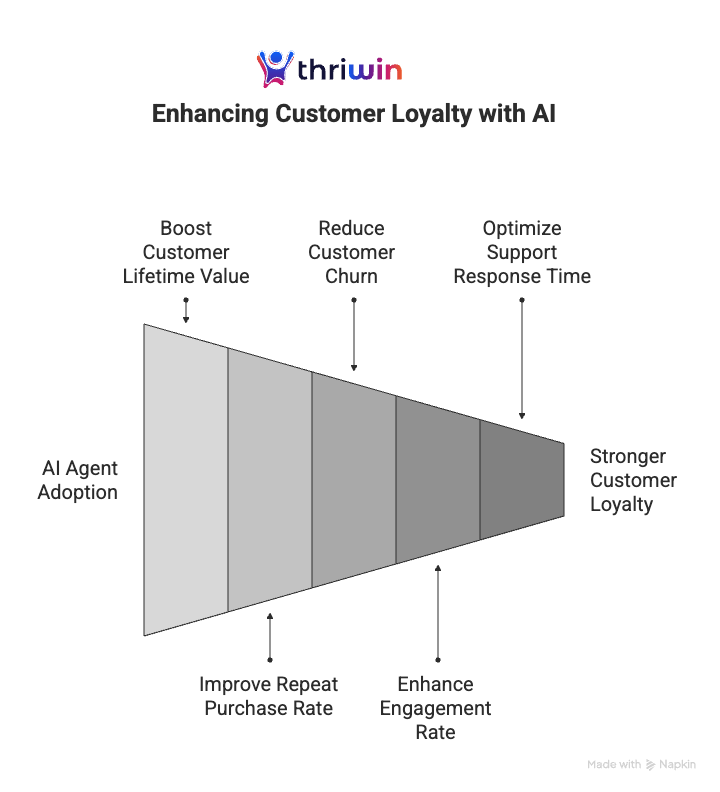
Adopting AI agents is just the beginning — measuring their performance ensures they’re driving real customer value. For SMBs, the key is tracking metrics that reflect stronger relationships, reduced churn, and consistent engagement rather than just revenue growth.
- Customer Lifetime Value (CLV)
Customer Lifetime Value measures the total revenue expected from a customer over time. AI agents help boost CLV by analyzing preferences, predicting purchases, and sending timely recommendations. Higher CLV means customers are buying more often, staying longer, and finding continued value through personalized engagement.
- Repeat Purchase Rate and Churn Reduction
Repeat purchase rate shows how often customers return after their first sale, while churn reveals how many leave. AI agents improve both by automating follow-ups, suggesting relevant products, and identifying early signs of disengagement. Timely interventions — like special offers or tailored reminders — help retain customers and strengthen loyalty.
- Engagement Rate and Support Response Time
Engagement rate tracks how actively customers interact with your brand, while response time measures support efficiency. AI agents improve both by automating quick, personalized replies and maintaining continuous communication. Faster resolutions and meaningful touchpoints signal customer satisfaction and build lasting trust.
Challenges and How to Overcome Them
While AI agents offer immense potential, SMBs often face a few challenges when implementing them. These hurdles usually revolve around data handling, team alignment, and financial feasibility. Understanding these challenges — and addressing them strategically — ensures that AI adoption drives sustainable growth without compromising trust or efficiency.
- Data Privacy and Customer Trust
AI systems rely heavily on customer data to personalize experiences, making privacy a top concern. Many SMBs worry about storing or processing sensitive information securely. To overcome this, businesses should prioritize transparent data practices — clearly communicating how information is used — and invest in compliant tools with strong encryption and access controls. Building trust through responsible AI use ensures customers stay confident while sharing data for better experiences.
- Human-AI Collaboration and Role Clarity
AI agents work best when they complement people, not replace them. However, unclear boundaries between automated and human tasks can lead to confusion or inconsistent experiences. SMBs can avoid this by defining clear workflows — allowing AI to handle repetitive, data-driven tasks while humans focus on empathy, strategy, and complex problem-solving. Regular training helps teams adapt and collaborate effectively with AI systems as dependable partners.
- Cost and Complexity Management for SMB Budgets
Budget constraints can make AI adoption seem daunting for small businesses. The key is starting small — using modular AI tools that deliver measurable results quickly. Cloud-based AI platforms and subscription models let SMBs scale capabilities over time without large upfront costs. Choosing solutions that integrate easily with existing systems also minimizes implementation complexity while maximizing return on investment.
Future Outlook: How AI Agents Will Redefine SMB Growth
The next generation of AI agents will fundamentally transform how SMBs operate and grow. These systems will move beyond task automation to deliver predictive personalization, where customer needs are anticipated before they’re expressed. Self-evolving agents will continuously learn from new data, adapting engagement strategies automatically. We’ll also see zero-touch loyalty programs, where repeat engagement happens seamlessly through proactive offers, recommendations, and reminders — all managed autonomously by AI.
This evolution marks a shift from reactive service to proactive relationship-building. Instead of responding to customer actions, AI will drive them — initiating meaningful interactions that strengthen loyalty and lifetime value. For SMBs, this means a future where growth is powered by intelligent systems that scale trust, not just transactions.
Start Nurturing Smarter with Thriwin
Thriwin is shaping how SMBs turn first-time buyers into lifelong customers through its AI agent ecosystem. Designed for scalability and simplicity, Thriwin’s platform enables small and medium businesses to automate engagement, personalize outreach, and sustain loyalty with minimal effort.
Its agentic framework connects every part of the customer journey — from lead nurturing and onboarding to retention and upselling — ensuring no client falls through the cracks. Thriwin combines automation with adaptive intelligence, helping businesses anticipate customer needs and act before opportunities are lost.
If your team is ready to move beyond one-time transactions and build meaningful, recurring relationships, explore how Thriwin’s AI-driven ecosystem can help you nurture smarter, grow faster, and retain customers effortlessly.
FAQs
1. What exactly are AI agents and how do they differ from chatbots?
AI agents are autonomous or semi-autonomous software systems that perceive their environment, make decisions, and act over time. They go beyond simple rule-based chatbots by learning from interactions, integrating across channels, and handling more complex workflows.
2. How can SMBs measure the impact of AI agents on customer loyalty?
Key metrics include Customer Lifetime Value (CLV), repeat purchase rate, churn reduction, engagement rate and support response time. These indicators show how well AI is helping businesses retain and nurture clients beyond the first sale.
3. What are the biggest challenges SMBs face when implementing AI agents?
Challenges include data privacy and ensuring customer trust, defining clear human-AI collaboration and role clarity, and managing cost and complexity within limited SMB budgets.
4. Are AI agents suitable for small and medium businesses with limited budgets?
Yes. Modern AI agent tools are increasingly affordable and designed for SMBs. Many solutions offer modular deployment, flexible pricing and integration with existing systems so even small teams can benefit.
5. What’s the future of AI agents for SMB growth and loyalty?
We’re moving toward predictive personalization, self-evolving multi-agent systems, and zero-touch loyalty programs. This means AI agents will proactively build relationships rather than just react—unlocking a new growth model for SMBs.

.webp)
.webp)